
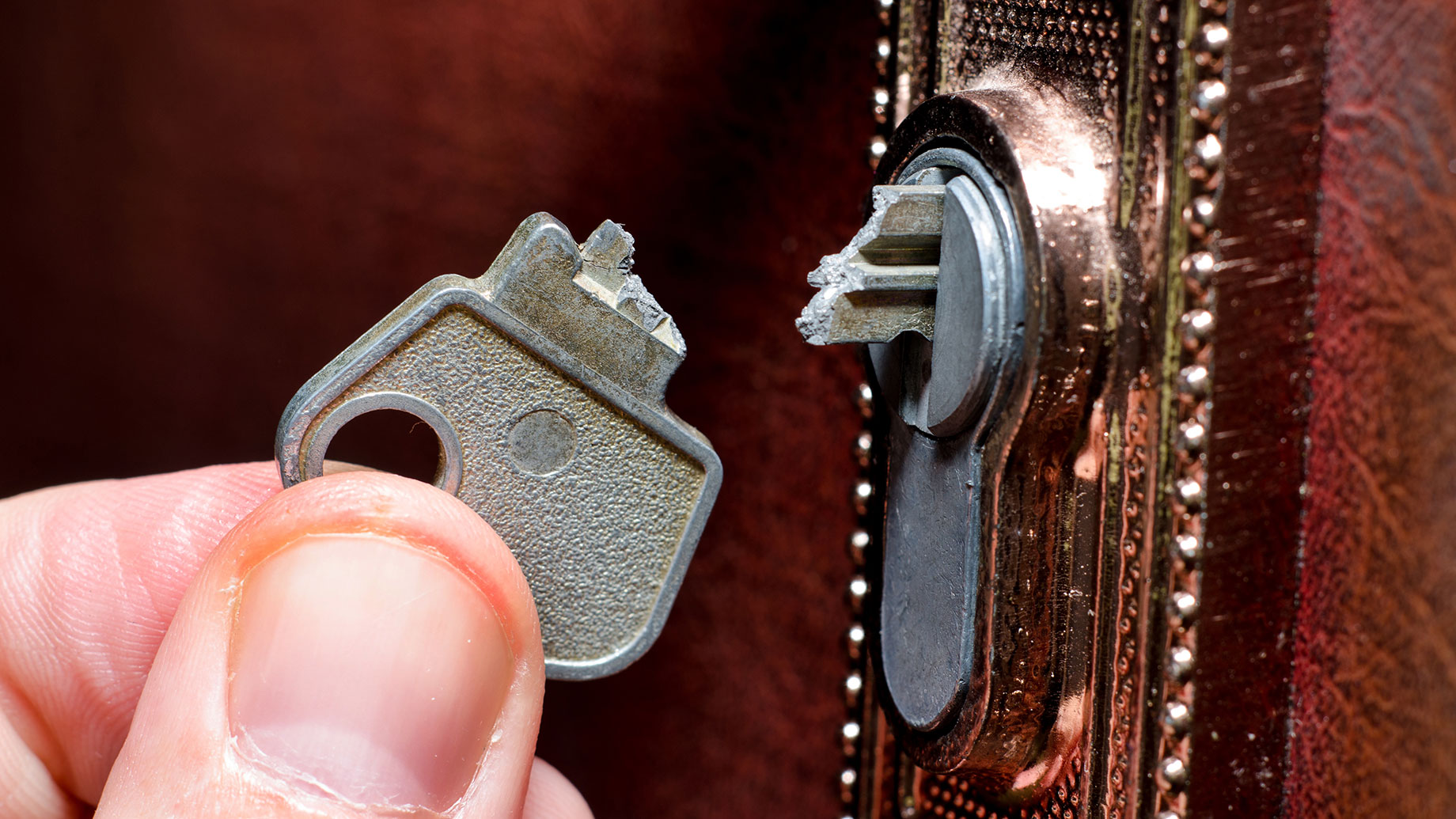
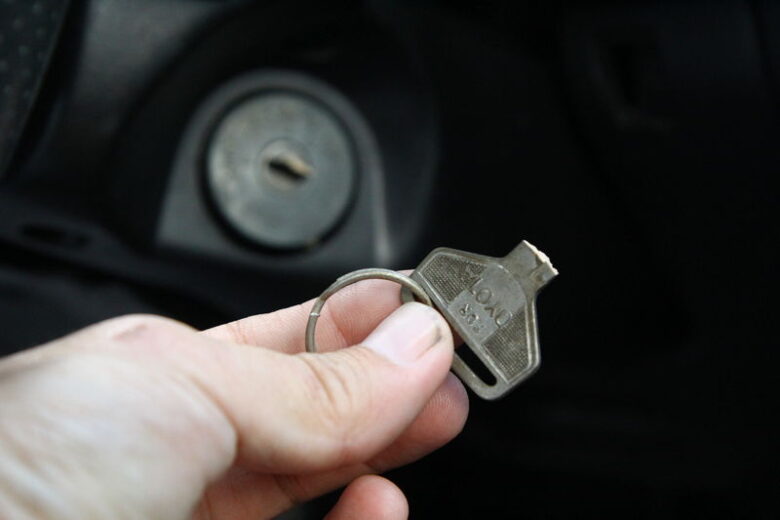
A key snapping off mid-turn leaves a fragment jammed awkwardly inside the lock. Our technicians extract it carefully, checking the mechanism thoroughly afterward, so nothing’s left compromised once the piece is out.
Careful extraction, a thorough check of the mechanism, and every Noble Park callout handled with the precision a snapped key demands. Technicians leave the lock fully functional, not just cleared of the fragment.
A snapped key blocks everything, so extraction happens carefully without wasting a moment.
Access shouldn’t wait around, so technicians cut a fresh key immediately and hand it over without unnecessary delay.
The lock gets inspected thoroughly afterward, giving you certainty nothing else was compromised.
Small commercial locks, like those on vending machines, can suffer key breakage just as easily as house doors. It happens with repeated daily use by staff managing stock. Technicians extract fragments from smaller, unusual mechanisms with the same careful approach. This matters for Noble Park businesses relying on smaller secured units regularly. Careful extraction keeps these overlooked locks functioning properly.
A key snapping off in a storage unit padlock leaves belongings inaccessible until it’s properly resolved. It happens more with padlocks exposed to weather and infrequent use. Technicians extract the fragment and assess whether the padlock itself needs replacing. This is common among Noble Park residents using off-site storage facilities. Quick resolution means access to your belongings isn’t delayed unnecessarily.

Office filing cabinets often use smaller, more delicate keys prone to snapping under repeated use. It happens gradually as the key wears thin from daily opening and closing. Technicians extract the fragment carefully, protecting sensitive documents from unnecessary access delays. This matters for Noble Park businesses managing physical records regularly. Careful extraction keeps important paperwork accessible without further complication.

Padlocks left outdoors on sheds are particularly prone to keys weakening from rust and repeated exposure. It happens gradually, often unnoticed until the key actually snaps. Technicians extract the fragment and advise on more weather-resistant replacements. This is a familiar issue for Noble Park homeowners with outdoor storage. Addressing it properly prevents a repeat breakage next season.
The moment a key breaks inside a lock is one of those experiences that imprints itself immediately on the memory — the sudden change in resistance as the metal gives way, the disconcerting lightness of the key stub left in your hand, and the immediate realisation that the rest of your key is now lodged inside your lock cylinder in a position you cannot reach, in a direction you cannot see clearly, and with consequences that range from inconvenient to genuinely urgent depending on the time of day and the specific lock involved. It is a situation that demands a professional response — not because broken key extraction is impossible to attempt without professional tools, but because every improvised extraction attempt made without those tools makes the situation measurably worse and the professional resolution that inevitably follows measurably more complex and more expensive.
At Noble Park Locksmith, we provide a professional broken key extraction service that removes broken key fragments from all lock types across Noble Park and the surrounding south-eastern Melbourne suburbs — cleanly, carefully, and without causing damage to the lock cylinder, the keyway, or the surrounding door hardware. Our licensed technicians carry purpose-built extraction tools designed specifically for this task, apply techniques developed through genuine experience with the full range of lock types found in Noble Park’s residential and commercial property landscape, and in the vast majority of cases complete the extraction without replacing the lock at all — saving Noble Park property owners the cost and disruption of unnecessary hardware replacement. Fast response, professional extraction, honest assessment of the cylinder’s post-extraction condition, and fair pricing — every time.
A key breaking inside a lock rarely happens in isolation from contributing factors that, if identified and addressed after extraction, can prevent the same problem from recurring in the same lock:
Every key insertion and withdrawal cycle subjects the key blade to micro-level mechanical stress that accumulates gradually across thousands of daily operations in Noble Park’s residential and commercial properties. This accumulated metal fatigue weakens the key’s cross-section — particularly at the shoulder where the key blade meets the bow — until the metal reaches its failure threshold. The breakage itself feels sudden and unexpected, but the process that led to it began years earlier and developed incrementally with every use.
A lock cylinder that has developed internal wear, component misalignment, or corrosion from Noble Park’s south-eastern Melbourne climate places significantly greater rotational stress on the key during operation than a correctly functioning cylinder. This additional stress dramatically accelerates key fatigue and substantially increases breakage risk — which is why a key breaking inside a Noble Park lock is frequently the first visible indication of an underlying cylinder problem that warranted professional attention considerably earlier.
Attempting to operate a stiff, resistant, or partially seized Noble Park lock by applying more rotational force than the key can withstand is one of the most common immediate causes of in-cylinder key breakage. The key blade is always the mechanically weakest point between the operator’s hand and the lock mechanism — and when a Noble Park cylinder is stiff enough that meaningful force is required to turn it, the key is already at significant breakage risk with every operation.
A key whose cut profile has worn through years of Noble Park daily use no longer aligns perfectly with the lock’s internal pin or wafer configuration — creating binding during key turning that subjects the blade to abnormal lateral stress in addition to the normal rotational stress of cylinder operation. This combination of stress types significantly elevates breakage risk compared to a correctly profiled key operating in a properly functioning cylinder.
A replacement key cut on a blank that is similar but not precisely correct for the lock’s specific keyway places the blade under abnormal operational stress from the first use — stress that accumulates across subsequent uses and eventually causes breakage at the point of greatest misfit between the blade profile and the keyway geometry.
Melbourne’s south-eastern suburbs — including Noble Park — experience genuine winter cold that causes metal lock cylinders to contract slightly, increasing the friction between the key blade and the internal pin stack during key operation. Attempting to force a cold-stiffened cylinder without allowing it to warm naturally, or applying an appropriate de-icing product to a frost-affected cylinder, significantly increases breakage risk during Noble Park’s cooler months.
The immediate instinct upon discovering a broken key inside a Noble Park lock is to attempt self-resolution using whatever tools are to hand. Understanding precisely why this consistently makes the situation worse — and more expensive to resolve professionally — is the most compelling argument for calling Noble Park Locksmith immediately rather than spending time on improvised attempts first:
The most common DIY extraction attempt involves inserting a thin object — a pin, a toothpick, a straightened paper clip, or the tip of a knife blade — alongside the broken fragment and attempting to hook it out or push it toward the keyway opening. In virtually every case, this approach pushes the fragment further into the cylinder rather than withdrawing it. Once the broken fragment passes the first pin chamber, extraction becomes dramatically more difficult and the risk of cylinder damage during extraction increases substantially.
When enough of the broken key is visible and protruding from the cylinder face to grip with pliers, tweezers, or similar tools, the temptation to pull it out directly is entirely understandable. The practical problem is that the rotational stress required to withdraw a fragment bound in the keyway under cylinder tension typically damages the keyway face edges and the cylinder face surface — converting a straightforward extraction job into a cylinder replacement requirement.
The suggestion to apply superglue or other adhesive to a thin implement, attempt to bond it to the broken fragment, and withdraw both together is a frequently encountered DIY recommendation that rarely achieves the bond required for successful extraction and frequently deposits adhesive residue inside the cylinder. Adhesive inside a lock cylinder creates a new problem that is considerably more difficult to address than the original broken key situation.
Any implement inserted into the keyway that doesn’t match the key’s specific profile risks contacting and disturbing the cylinder’s internal pin stacks — dislodging springs, displacing pins, and creating a disrupted internal geometry that may render the cylinder completely inoperable even after the broken fragment is eventually removed. A cleanly extractable broken key situation becomes a mandatory cylinder replacement when the pin stack is disturbed during improvised extraction.
Our technician begins by carefully examining the broken key fragment’s position within the cylinder — assessing penetration depth, rotational tension state if the key broke mid-turn, the orientation of the cut profile within the keyway, and whether any prior DIY extraction attempts have complicated the situation. This assessment determines the most appropriate extraction tool and technique for this specific fragment and cylinder combination.
If the key broke during a turning action — mid-rotation within the cylinder — the fragment will be held under tension by the pin stack pressing against the blade at its current rotational position. Before extraction can proceed, this rotational tension must be carefully relieved using specialist tension control tools that return the cylinder plug to its resting position without pushing the fragment deeper into the keyway or causing additional cylinder damage.
Professional broken key extraction tools are available in several designs — hooked extractors, serrated extractors, and spiral extractors — each suited to different fragment positions, key blade profiles, and cylinder configurations. Selecting the correct tool for the specific Noble Park extraction situation significantly increases first-attempt success and reduces the risk of keyway damage during the procedure.
With the correct extraction tool selected, our technician inserts it carefully into the keyway alongside the broken fragment — guided by the keyway profile to avoid contacting the pin stacks — until the tool’s engagement feature is correctly positioned relative to the fragment’s cut edge or blade surface.
With the extraction tool correctly positioned, our technician applies steady, controlled outward pressure to grip the fragment against the keyway wall and withdraw it smoothly and consistently. This step requires patience and precise technique — applying excessive force or withdrawing too rapidly risks losing grip on the fragment or causing keyway edge damage during the withdrawal movement.
Once the fragment is successfully removed, we inspect the cylinder thoroughly for any damage caused by the breakage itself, by the mechanical stress preceding it, or by any prior DIY extraction attempts. We assess pin stack integrity, keyway surface condition, spring seating, and overall cylinder operation before determining whether the lock can be returned to full reliable service or requires cylinder replacement.
Following successful extraction, we assess the contributing factors behind the breakage — cylinder wear, key profile wear, excessive operational stiffness, or environmental factors — and provide honest advice on addressing these underlying causes before a repeat breakage occurs in the same lock. We discuss replacement key options including cutting a new key from the broken original, rekeying the cylinder with fresh keys, or replacing the cylinder entirely if the post-extraction assessment reveals damage that makes continued service inadvisable.
Our broken key extraction capability covers the complete range of lock and key types found across Noble Park’s residential, commercial, and automotive landscape:
Once we’ve extracted your broken key and assessed the contributing factors, these practical measures significantly reduce the risk of the same problem recurring:
A Noble Park house key that shows visible wear along the blade edge, feels rough during insertion, or requires more force to turn than it previously needed is a key approaching its failure threshold. Replacing it while it remains intact — at the cost of a simple key cutting callout — prevents the significantly more disruptive and more expensive broken key extraction and potential cylinder replacement that follows when the key finally fails inside the cylinder.
A Noble Park lock that requires noticeable force to operate is the most reliable single predictor of future key breakage. Having a stiff cylinder professionally assessed — cleaned, lubricated, or repaired as the diagnosis warrants — before a breakage occurs is always the smarter and more cost-effective approach than extracting the broken key after the accumulated stress finally exceeds what the blade can withstand.
Always have Noble Park replacement keys cut by a professional locksmith using the precisely correct blank for your specific lock. A near-match blank that creates abnormal operational stress from the first use will fail sooner than a correctly profiled replacement — and the failure, when it comes, will almost certainly occur inside the cylinder at the least convenient possible moment.
Noble Park’s south-eastern Melbourne climate — with its genuine winter cold and humid summer conditions — creates seasonal changes in cylinder operating characteristics that increase breakage risk at seasonal extremes. Applying a small amount of appropriate cylinder lubricant to external lock cylinders before Noble Park’s winter and at the onset of summer reduces friction-related breakage risk and extends cylinder service life significantly.
Our broken key extraction service covers Noble Park and the surrounding south-eastern suburbs including Springvale, Keysborough, Dandenong, Bangholme, Sandown, Moorabbin, Mulgrave, Dingley Village, and Carrum Downs. We come to your location fully equipped — completing most extractions and providing replacement key advice in a single visit at a price that genuinely reflects the skilled work involved.
Don’t make the situation worse with improvised extraction attempts that will damage your cylinder and complicate the professional resolution that follows. Noble Park Locksmith provides fast, precise, and damage-free broken key extraction across Noble Park and the surrounding south-eastern suburbs — with the specialist tools, the correct technique, the honest post-extraction assessment, and the fair pricing that a stressful situation genuinely deserves. Call us now and let our licensed technicians resolve your broken key situation cleanly, efficiently, and without unnecessary cost.
Same-Day Appointments Available

In most cases yes, extraction is performed without needing to remove the whole cylinder.
This is exactly the situation the specialised tools are designed for, avoiding further pushing or damage.
Yes, though the approach differs slightly from standard pin-tumbler locks, adjusted accordingly.
Generally no, a fresh key is the more reliable option once a fragment has broken off.
Yes, the process itself is quick and low-key, minimising attention during a work environment.
